
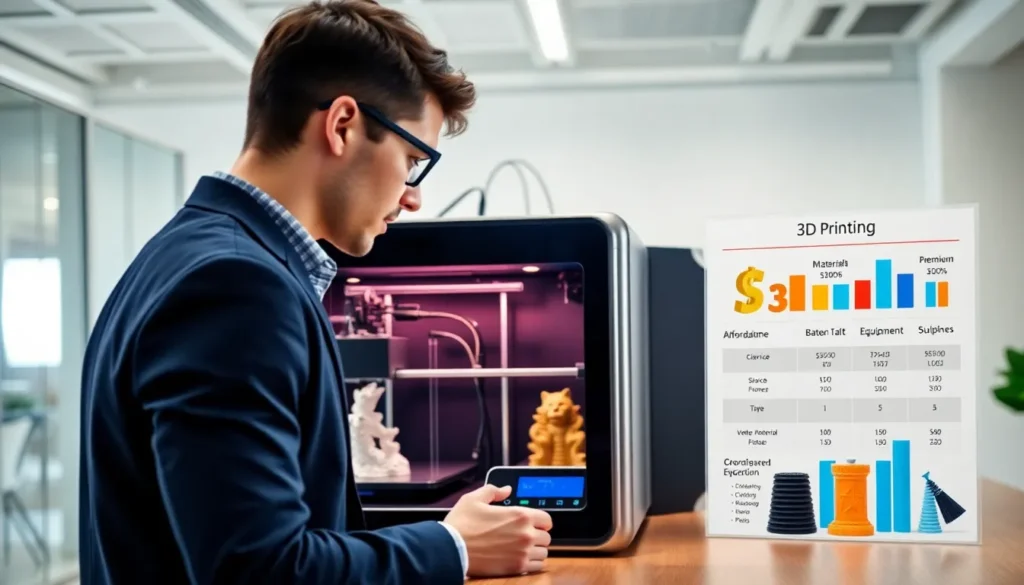
Curious about how much 3D printing actually costs? You might be thinking it’s as simple as tossing a few bucks into a printer and waiting for your masterpiece to materialize. But before you dive headfirst into the world of 3D printing, it’s time for a reality check. The costs can be as varied as the models you can create. Grab your favorite drink, sit back, and let’s dissect the many factors that contribute to 3D printing costs. Spoiler alert: you might just find that the price tag isn’t as scary as you thought.
Factors Affecting 3D Printing Costs
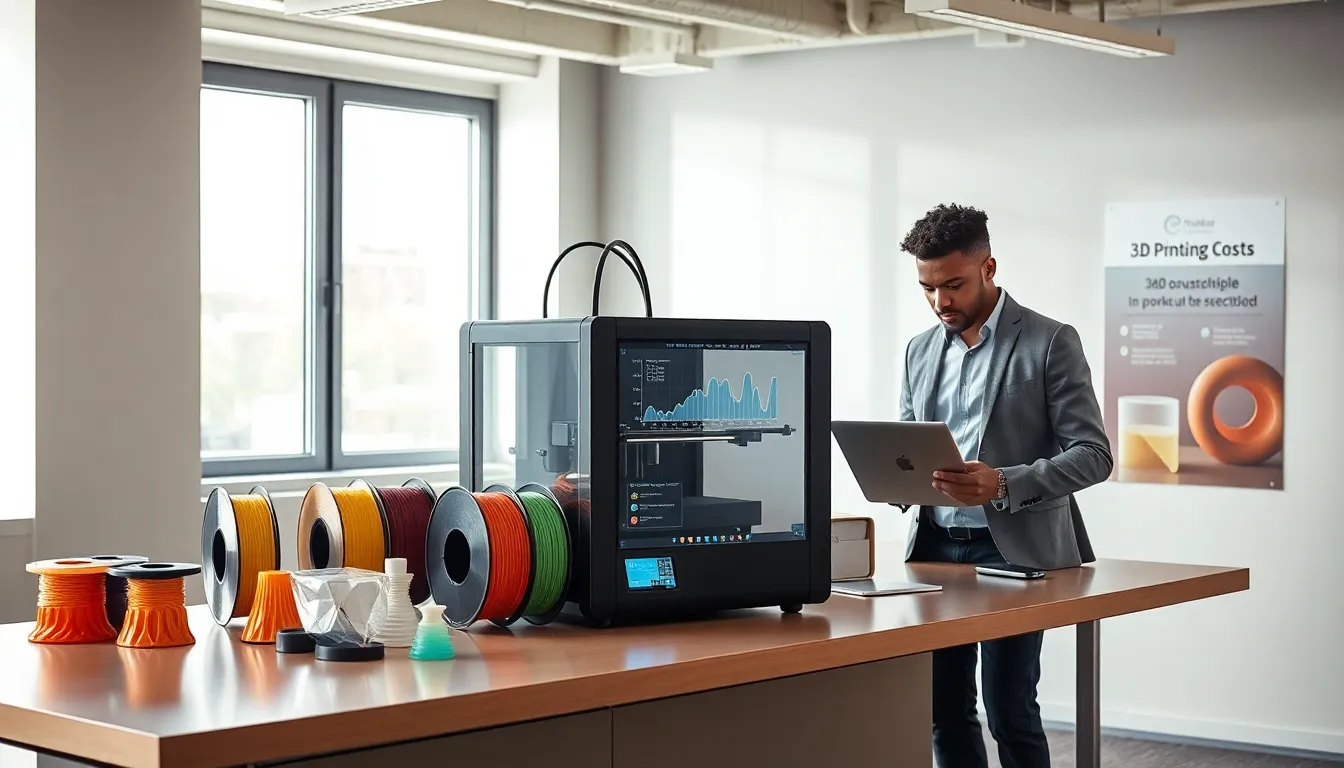
Material Costs
The first factor on the list? Material costs. The type of filament or resin you choose has a huge impact on your overall expenses. FDM (Fused Deposition Modeling) printers often use PLA or ABS plastic, which can set you back around $20 to $50 per kilogram. For SLA (Stereolithography) printers, a liter of resin can run upwards of $100. It’s a bit like choosing between a steak dinner or a burger: both are tasty, but the price reflects the choice.
Printer Costs
Next up are printer costs. Whether you’re eyeing a budget-friendly $200 model or a professional-grade machine that could cost you thousands, your choice will significantly shape your budget. Don’t forget about upkeep. A reliable printer demands maintenance, which can add a few hundred dollars to your yearly budget.
Labor and Design Costs
Labor and design costs shouldn’t be overlooked either. If you’re planning to design your models, factor in the cost of software or hiring a designer. Professional-grade 3D design software can cost anywhere from $100 to hundreds of dollars, depending on your needs. So if you’re not a digital whiz, prepare to open your wallet a little wider.
Cost Comparison of Different 3D Printing Methods
FDM Printing Costs
Starting with FDM printing, this method is often the most budget-friendly choice. Apart from the material cost, the price to operate an FDM printer averages around $15 to $30 per printed object, depending on size and complexity. For hobbyists or enthusiasts, it offers a pretty good bang for the buck.
SLA Printing Costs
On the other hand, SLA printing, while providing high-resolution prints, can escalate your costs. With materials running high, the cost of printing a single, detailed object can easily reach $50 to $100 or more. That’s the price one pays for detail and precision.
SLS Printing Costs
Finally, let’s not forget about SLS (Selective Laser Sintering) printing, the premium option for industrial applications. This can cost anywhere from $100 to $500 per part, especially when factoring in specialized materials. It’s akin to driving a luxury car: you’ll enjoy the ride, but it comes with high maintenance.
Estimating Costs for Personal vs. Commercial Use
Personal 3D Printing Costs
When it comes to personal use, costs are often manageable. A beginner might end up spending $500 to $1,000 to set up, including the printer, a roll of filament, and basic software. If that’s in the budget, you can create small projects and prototypes without emptying your savings.
Commercial 3D Printing Costs
For businesses, the equation changes dramatically. Commercial setups can run into tens of thousands or even hundreds of thousands of dollars. Not only is there the initial investment to consider, but ongoing costs for materials, maintenance, and labor can add up swiftly. If a company plans to produce large volumes, it might need multiple machines, and the costs can spiral quickly.
Hidden Costs of 3D Printing
Maintenance and Upkeep
Unfortunately, it’s not all sunshine and rainbows in the realm of 3D printing. Many overlook the hidden costs associated with maintenance and upkeep. Regularly replacing parts, lubricating moving mechanisms, and other routine tasks add to the overall budget. Including around $200 to $500 annually for upkeep in your estimates is a good rule of thumb.
Post-Processing Costs
Post-processing is another often-unexpected expense. After printing, models frequently require finishing touches like sanding, painting, or assembly. This means additional materials and tools, impacting your bottom line. A beginner might not factor in another $50 to $200 on top of printing costs for acceptable quality.


